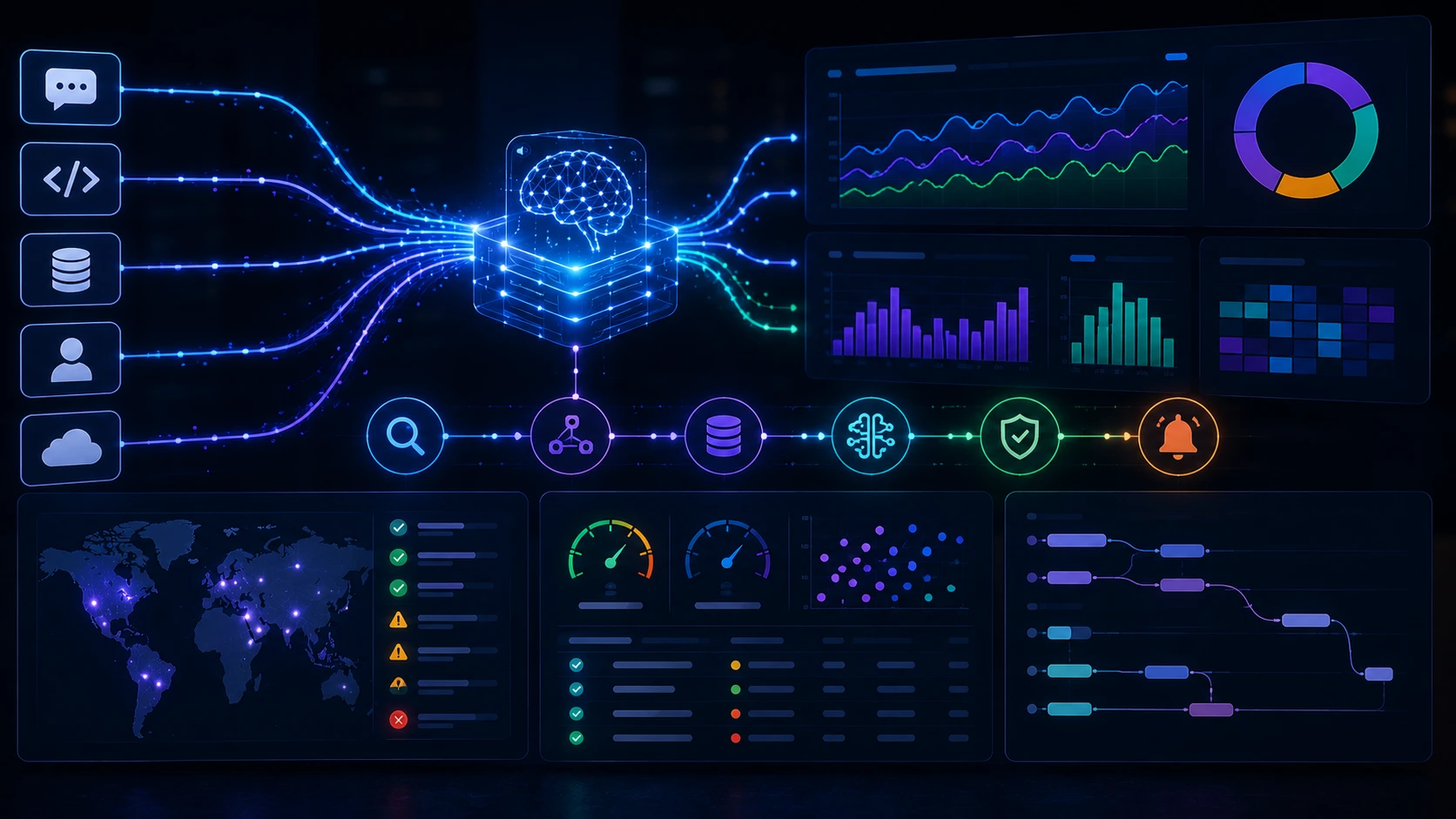

Picking a vector database for a multi‑tenant SaaS product is more than comparing raw recall or latency numbers. You need a predictable way to isolate customer data, limit noisy neighbors, back up and restore individual tenants, and operate at scale without blowing the budget. This guide walks through the tenancy, operational, data‑protection, and feature tradeoffs between Pinecone, Milvus, Weaviate, and Redis so you can choose a fit for your SaaS architecture and risk profile.
What matters for a vector database multi-tenant deployment
Before evaluating vendors, clarify the constraints that make a vector DB suitable for multi‑tenant SaaS. These are the criteria most engineering and product teams should weigh:
- Tenant isolation model: Logical namespaces vs per‑tenant indexes vs physical clusters.
- Data protection and recovery: Per‑tenant backups, snapshots, and restore granularity.
- Performance isolation: How to prevent a single tenant from affecting others.
- Scaling and operations: Horizontal scaling, autoscaling, GPU support, and maintenance windows.
- Security and governance: Encryption, VPC/private networking, RBAC, and audit logs.
- Search features: Metadata filtering, hybrid search (vectors + scalar), index algorithms and their tradeoffs.
- Cost model and predictability: Managed versus self‑hosted costs, predictable billing per tenant, and license considerations.
Keep those criteria in front of you as we compare four common options.
High‑level comparison: quick takeaways
Short versions for teams who want a starting recommendation:
- Pinecone — Strong managed offering with easy logical namespaces and built‑in scaling; good for teams prioritizing operational simplicity and predictable behavior.
- Milvus — Flexible and high‑performance open‑source engine; best if you want self‑host control, GPU acceleration, and are comfortable with ops complexity for per‑tenant isolation.
- Weaviate — Built with schema/semantic search in mind; useful when rich metadata, semantic filters, and integrated ML modules are important for tenant features.
- Redis (vector capabilities) — Low latency, familiar operational model for teams already using Redis; favors small to medium embeddings workloads where tight latency and a single operational plane matter.
Below we unpack the tenancy, backups, security, and operational tradeoffs for each product in more detail.
Pinecone: managed simplicity and logical isolation
Pinecone is a managed vector database that presents namespaces and indexes as first‑class concepts. For many SaaS teams the attraction is operational predictability: scaling, index maintenance, and basic data lifecycle tasks are handled by the service.
- Tenancy model: Logical isolation through namespaces and indexes. You can map one namespace per tenant, or group small tenants into shared namespaces with tenant IDs in metadata.
- Performance isolation: Achieved through index choices and capacity units; you can provision separate indexes for heavy tenants to avoid noisy neighbors, but there’s limited control over physical placement.
- Backups and recovery: Managed snapshots and export APIs simplify backups. Per‑tenant restore usually requires restoring an index or namespace rather than an instant point‑in‑time restore for a single key.
- Security and governance: Provides encryption in transit and at rest, API keys, and ACLs; integrate with your app’s IAM for access control.
- Best when: You want to move fast, avoid cluster ops, and accept logical isolation as sufficient for compliance and SLA needs.
Tradeoffs: less direct control over hardware and underlying replication. For strict regulatory isolation or extremely large tenants, you may prefer physical isolation.
Milvus: open‑source power for custom isolation and scaling
Milvus is commonly chosen by teams that want fine control over index configuration, storage tiers, and deployment topology. It supports multiple index types and can tap into GPU acceleration for heavy workloads.
- Tenancy model: Typically self‑hosted with logical collections or separate clusters per tenant. You can isolate tenants by running per‑tenant clusters (physical isolation) or use separate collections with careful access control (logical).
- Performance isolation: Requires architecture work: allocate resources (CPU/GPU, memory) per cluster or use admission control and request rate limiting for shared deployments.
- Backups and recovery: Snapshot tools and storage backends let you write out collection data. Per‑tenant recovery is feasible but operationally heavier—restoring a large collection can require reindexing.
- Security and governance: Self‑host deployments permit VPC networks, custom RBAC layers, and integration with enterprise identity systems, but you must implement and maintain them.
- Best when: You need maximum configurability, want to avoid vendor lock‑in, or have high throughput and GPU needs that justify the ops burden.
Tradeoffs: higher operational complexity and staffing cost. If you plan per‑tenant physical isolation for compliance, Milvus gives you that ability at the price of more maintenance.
Weaviate: schema and semantic filtering for tenant‑aware search
Weaviate combines a vector engine with a schema layer that makes metadata filtering and semantic graph queries straightforward. It suits SaaS products that layer rich metadata-driven features on top of embeddings.
- Tenancy model: Use classes and tenants can be separated by class or by namespace/tenant field. Weaviate’s GraphQL API and schema approach make per‑tenant queries easy to express.
- Performance isolation: Achieved via namespaces or running separate clusters for heavy tenants. The integrated modules can add CPU/memory costs per node.
- Backups and recovery: Snapshot capabilities exist, and data export/import workflows are supported; per‑tenant restores usually require export/import of the tenant’s class or objects.
- Security and governance: Supports API keys, role control, and can be run inside a VPC. Schema-driven validation helps enforce data models across tenants.
- Best when: Your product needs built‑in metadata filtering, GraphQL access, or enrichment modules (e.g., text2vec) and you want an opinionated platform.
Tradeoffs: less raw flexibility than unmanaged engines for custom index tuning; the schema benefits come with operational considerations when upgrading modules.
Redis as a vector store: ultra‑low latency in an operationally familiar plane
Redis added vector capabilities that let teams leverage existing Redis expertise, tooling, and high‑performance memory architecture for embedding workloads that favor low latency.
- Tenancy model: Logical separation via keys, databases, or Redis namespaces. Enterprise offerings can provide multi‑tenant controls at the cluster level. For strict isolation, separate clusters per tenant are common.
- Performance isolation: Redis is excellent at predictable latency; however, memory usage from large vector indexes can be dominant. Quotas and QoS are usually implemented at the application layer or via separate clusters.
- Backups and recovery: RDB and AOF mechanisms enable persistence and point‑in‑time recovery, but restoring a single tenant may entail exporting and reimporting key sets unless you plan your key structure for granular snapshots.
- Security and governance: Mature enterprise features for encryption, ACLs, and VPC deployment when using managed Redis Enterprise; self‑hosted Redis requires operational controls for multi‑tenant compliance.
- Best when: You already run Redis at scale, need sub‑10ms latency, and have embedding sizes that fit in memory economically.
Tradeoffs: memory costs can be high for large datasets. Redis provides fast access but requires deliberate backup and tenancy design for per‑tenant recovery.
How to choose: a practical decision checklist
Use this checklist during vendor selection and POC planning. Answer each question for your product and weight answers when comparing options.
- Regulatory and compliance needs: Do tenants require physical separation, or is logical isolation (namespaces/collections) enough?
- Recovery granularity: Must you restore a single tenant quickly, or can restores be done at index/collection level with reindexing time acceptable?
- Expected scale: Forecast number of tenants, average vectors per tenant, peak queries per second, and embedding dimensionality.
- Latency SLAs: Are sub‑100ms responses required at the 95th/99th percentile, or are higher latencies acceptable?
- Operational team and budget: Do you have staff to run and tune clusters, or do you prefer managed services?
- Feature priorities: Metadata filtering, hybrid search, semantic modules, or GPU acceleration—rank them.
- Cost predictability: Do you prefer per‑request billing, capacity units, or cluster cost models?
Map answers to vendor characteristics. If you need low ops and per‑tenant namespaces with easy scaling, a managed provider is attractive. If you need full control over hardware and isolation, a self‑hosted engine like Milvus is often better.
Tenancy patterns and practical implementation guidance
Common tenancy patterns and the tradeoffs they introduce:
1. Shared logical namespace (most compact)
One index with tenant_id in metadata. Pros: minimal resource footprint and easy search across merged data when needed. Cons: noisy neighbor risk, complex per‑tenant quotas, and more difficult per‑tenant restores.
2. Per‑tenant indexes/collections (balanced)
Each tenant gets its own index. Pros: straightforward per‑tenant backup/restore and easier resource isolation by provisioning. Cons: management overhead as tenants increase; some vector DBs have limits on number of indexes.
3. Physical isolation (strongest)
Run separate clusters or instances per large/regulated tenant. Pros: maximum isolation, simplest compliance, and clear billing. Cons: highest cost and operational complexity.
Practical tip: use a hybrid approach—small tenants in shared namespaces, medium tenants on dedicated indexes, and the largest or regulated tenants on isolated clusters.
Vector DB isolation and backups: patterns that work in production
Backing up vectors differs from relational data because of index structures and reindexing time. Follow these pragmatic practices:
- Design for exportability: Store original payloads and metadata separately (e.g., in object storage or a relational DB) so you can regenerate vectors and rebuild indexes if needed.
- Per‑tenant snapshot strategy: If the DB supports namespace-level snapshots, schedule per‑tenant snapshots aligned with tenant SLAs. Otherwise, export tenant keys or collections to object storage for targeted restores.
- Test restores regularly: A backup is only useful if it can be restored within acceptable RTO. Practice restoring a tenant to a staging environment and measure reindexing time.
- Use incremental snapshots where possible: Full snapshots for large tenants are costly; incremental approaches reduce storage and restore time.
- Plan for schema and model evolution: Keep migration scripts for vector dimensionality changes, embedding model swaps, and metadata updates.
These approaches apply whether you run Pinecone, Milvus, Weaviate, or Redis—what changes is how much the platform automates.
Operational checklist for POC and production rollout
When you evaluate candidates, run POCs that include:
- Representative tenant mix: heavy, medium, and light tenants with realistic data shapes and query patterns.
- Failover and restore test: delete a tenant’s collection or namespace and restore from backup to measure RTO and data integrity.
- Noisy‑neighbor simulation: run a synthetic workload on one tenant and measure impact on others under your tenancy model.
- Cost modeling: measure storage footprint, API/capacity units, and projected monthly bill at your expected scale.
- Security audit: validate encryption, network isolation, and RBAC flows for tenant admins and support staff.
Document the operational runbook for common tasks: onboarding a tenant, setting quotas, backing up, and emergency restores.
Which one should you pick? Practical recommendations
- Fast time to market, limited ops staff: Start with a managed service (Pinecone or managed Weaviate). They reduce operational burden and let you prove product‑market fit quickly.
- High control and GPU acceleration: Choose Milvus self‑hosted or a vendor that offers managed Milvus if you need heavy reindexing, custom indexes, or GPU tuning.
- Rich metadata and semantic features: Weaviate’s schema and GraphQL approach speeds development when you rely heavily on filters and semantic schema mapping.
- Ultra‑low latency, single operational plane: If you already operate Redis and latency is paramount, Redis’ vector features can integrate smoothly—plan for memory and backup patterns accordingly.
Remember: many teams adopt a staged approach—begin with a managed vector database to iterate on features, then migrate heavy or regulated tenants to isolated clusters or self‑hosted deployments once scale and requirements justify the ops cost.
Next steps: run a focused validation
Make your choice testable within a week or two. Run a POC that includes representative data and these minimal experiments:
- Measure 95th/99th percentile query latency across tenant sizes.
- Run a per‑tenant restore and record RTO and reindex cost.
- Simulate a noisy tenant and observe how you can throttle or isolate that tenant.
- Estimate cost per tenant using your expected growth curve and factor in backup storage and reindexing time.
Keep a checklist of operational gaps discovered during the POC and use it to negotiate SLAs or define in‑house tools if you self‑host.
Choosing the right vector DB for multi‑tenant SaaS is a question of tradeoffs: operational simplicity versus control, logical separation versus physical isolation, and immediate cost versus long‑term maintainability. Validate those tradeoffs with a focused POC before committing at scale.
Frequently Asked Questions
Can I use a single vector index for all tenants?
Yes, but it's a tradeoff. A single shared index simplifies operations and saves resources, yet increases noisy‑neighbor risk and complicates per‑tenant backups and restores. Use tenant metadata and strict quotas if you choose this pattern, and run noisy‑neighbor tests during your POC.
How do I perform per‑tenant backups and restores?
Prefer platforms that support namespace or collection snapshots. If not available, export tenant objects and metadata to object storage so you can reimport and reindex. Always test restores to measure reindex time and recovery point objectives.
When should I prefer managed services like Pinecone over self‑hosting Milvus?
Choose managed services if you want predictable operations, minimal cluster maintenance, and faster time to market. Prefer self‑hosting when you need custom hardware (GPUs), fine‑grained control, or want to avoid vendor lock‑in despite higher ops overhead.
Is Redis suitable for large vector datasets?
Redis can deliver very low latency, but it stores vectors in memory which raises cost for large datasets. For large-scale storage with lower memory overhead, consider disk‑backed engines or hybrid architectures and validate cost in a realistic POC.
What tenancy pattern balances cost and isolation for SaaS?
A hybrid approach: house small tenants in shared namespaces, give medium tenants dedicated indexes, and run largest or regulated tenants on isolated clusters. This balances cost and compliance without excessive operational complexity.